
A Quiet Exit for a Quiet Warrior: Kukushkin Retires From Professional Tennis
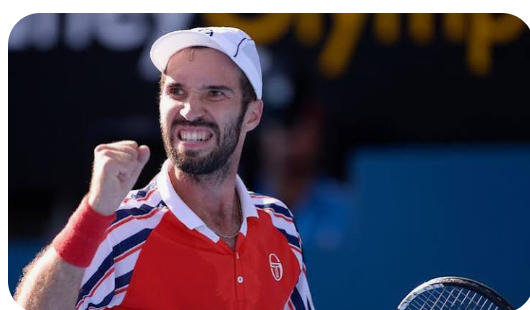
There were quite a few huge stories taking place this week in the world of professional tennis. One of the biggest was the retirement of beloved tennis veteran Mikhail Kukushkin in the ATP 250 tournament in Almaty.
Throughout this piece I am going to run through what made the Kazakh the player that he is, why he was a difficult player to beat and the legacy that he leaves behind after 20 years of being on the professional circuit.
Kukushkin began playing tennis when he was just six years old and for him his dreams of becoming a professional tennis player was looking incredibly unlikely and close to impossible. That was mostly because Mikhail's story often was a story of survival, survival outside of the lines and but also while he was competing on a tennis court at the highest level over the years.
Two of the darkest times for him was the financial strain of trying to break through to become a professional tennis player when improving and developing his game in his teenage years. But also the collapse of his marriage in the year of 2018 which was another phase of getting by and surviving.
So what made Kukushkin such a difficult player to overcome? For me, I have always seen the Kazakh as an against-the-odds type of player. Kukushkin has never been someone big in stature, has never possessed a huge serve to bail him out of pressurised service games and he does not have the explosive brute force game that the majority of players on the men's tour definitely have at this point.
As a result, the Kazakh had to find other ways to make his opponents fear him. His game was mainly based around being the master of superior point construction and in-point intelligence. He acknowledged he did not have the god-given weaponry of his foes, but knew he could lean on the ability to outsmart them in alternative ways. In the below video Kukushkin's point construction is apparent in order to get the upper-hand gradually:
A great example of Kuku's excellent point construction. Always looks one step ahead. (via Tennis TV)
One of those ways was by neutralising the power coming at him. Kukushkin's trajectory and type of ball is up there as the flattest and lowest shots on tour that I can remember. There are flat ball-strikers on tour but he is alongside someone like Adrian Mannarino in terms of how hard it is to counteract the lowness of the ball coming your way. In doing so this was how he stood up to some heavy hitting baseliners, neutralising their power then controlling and orchestrating points with his intelligence and court smarts instead. Most of the powerful guys on tour like a ball that sits up and gives them the additional time to dictate with their better groundstroke but Kukushkin had to get it outside of their strike zone, make them bend their knees in difficult areas of the court and prevent their power from being the overwhelming factor in the conversation.
In the video below, Kukushkin neutralises off the first return with the lowness of his return but also the quality of depth then takes care of the point from there:
The second quality that enabled the Kazakh to rise to inside the Top 40 in the world in 2019 was through absorbing and redirecting the superior pace coming in his direction. This was effective due to catching powerful players off guard by his ability to turn a tough situation into an enviable one but also that was often what led to rally scenarios where Kukushkin could then establish dominance with low ball trajectories as mentioned previously. Mechanically-speaking he had some of the most compact back swings for a backhand groundstroke you will ever see on tour. It made him incredibly difficult to be rushed with ease but also it hardly ever broke down either. It was such a reliable and dependable groundstroke for him.
On top of that, the backhand had a certain element of disguise attached to it. The short nature of the take-back was a big reason why the direction of whether he was going cross-court or down the line was hard to pick up and read.
The concluding backhand down the line in the clip from his first round in Almaty shows this too. Sakellaridis cannot guarantee which area of the court to cover and is wrong footed from a high quality backhand down the line. The disguise and short back swing created the issue for the Greek here.
Kukushkin turns the point on its head through immaculate disguise here in Almaty (via Tennis TV)
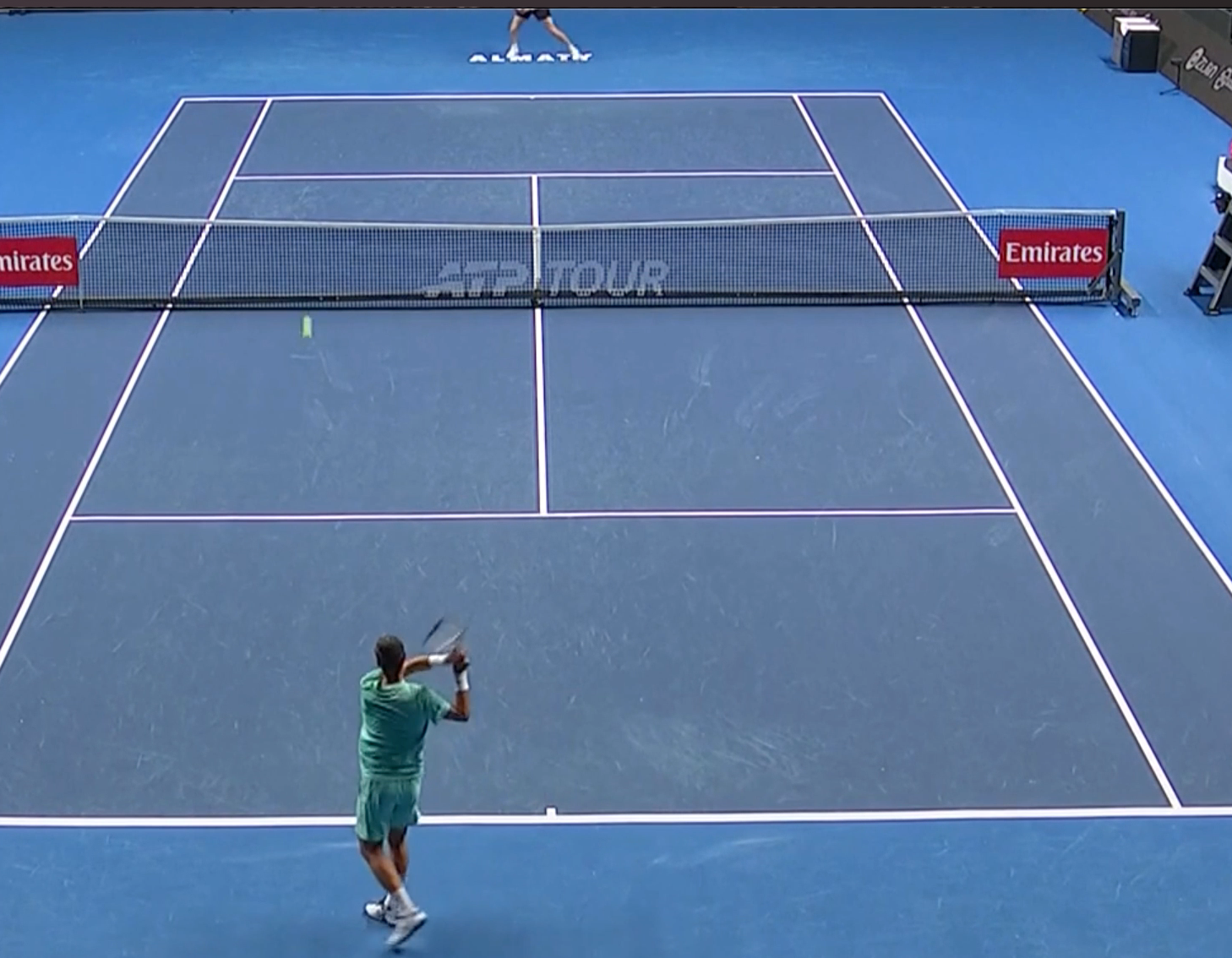
Arguably one of the masters of ball location, retaining depth quality and creating sharp angles/width in order to prevent players from getting set. This clip from his match against Bu shows off these qualities all in one point.
The perfect video to show Kukushkin's deep intelligence, problematic sharp angles and location quality as a player in one point (via Tennis TV)
His systematic power-stripping game that spanned over a couple of decades is something that hardcore tennis fans admire due to the uniqueness of it. I think it can be argued that Kukushkin stands alone with the way he implemented his tennis and made a game no-one ordinarily sees on the biggest stage compete with the very best. But he did just that and it was not a flash in the pan either. He has a record of beating four top ten players during his time on tour and has wins over the likes of Stanislas Wawrinka and Grigor Dimitrov to name a few.
The legacy he leaves behind for me are things like going through continual adversity and still overcoming. His legacy was also surviving and thriving in a world full of power players through unconventional and unorthodox ways that encouraged the next generation that their style of play can operate and function on a grander stage. Lastly his legacy was being a trailblazer for promising Kazakh players that despite opportunities looking slim it can happen as Kukushkin was an example of it happening. More and more Kazakh players have succeeded at the highest level since then.
And last but not least the way he responded to big adversity was admirable. To have double hip surgery in 2012 and be on the shelf for six months then to subsequently have to build his career from a ranking outside the Top-400. It took a lot of grinding but he still clawed his way to a career high ranking of 39 in 2019 in the end.
For me personally, I have always been the type of tennis fan that appreciates and loves versatility and diversity in how a tennis match is won. Simplicity in tennis is something many people are drawn towards but I like to see different personalities, interesting ways to win points and adore the tactical side of the game, too. This is why I appreciated Kukushkin because he was a deep-thinking tennis player that was like watching someone play chess out there. So being able to try and understand what he was trying to implement on court tapped into the reasons I switch the television on in the first place.
So thank you Mikhail for taking us on your tennis journey and thank you for being a huge part of my love for the sport.
Comments ()